← Back to work

Product Innovation Strategy

Bang & Olufsen is a global luxury consumer electronics brand known for combining advanced audio engineering with distinctive design and craftsmanship.

During my internship at the Copenhagen headquarters, I led a mixed-methods research programme exploring the future of the portable speaker category. The goal was to understand how the market was evolving and identify which customer segments the next product generation should prioritise.

The project combined market analysis, expert interviews, product testing and large-scale quantitative research to inform strategic product decisions.

Consumer Electronics Mixed Method Research Data Analysis Concept Recommendations
Company Bang & Olufsen
My Role Product Management Intern
Scale 400 users · 10+ experts · 6 countries
Tools Qualtrics, R Studio
Date 2022
B&O Hero

During my year-long internship, I worked across three audio categories: headphones, earphones and portable speakers. My work spanned competitive analysis, research, product ideation and portfolio discussions with cross-functional teams.

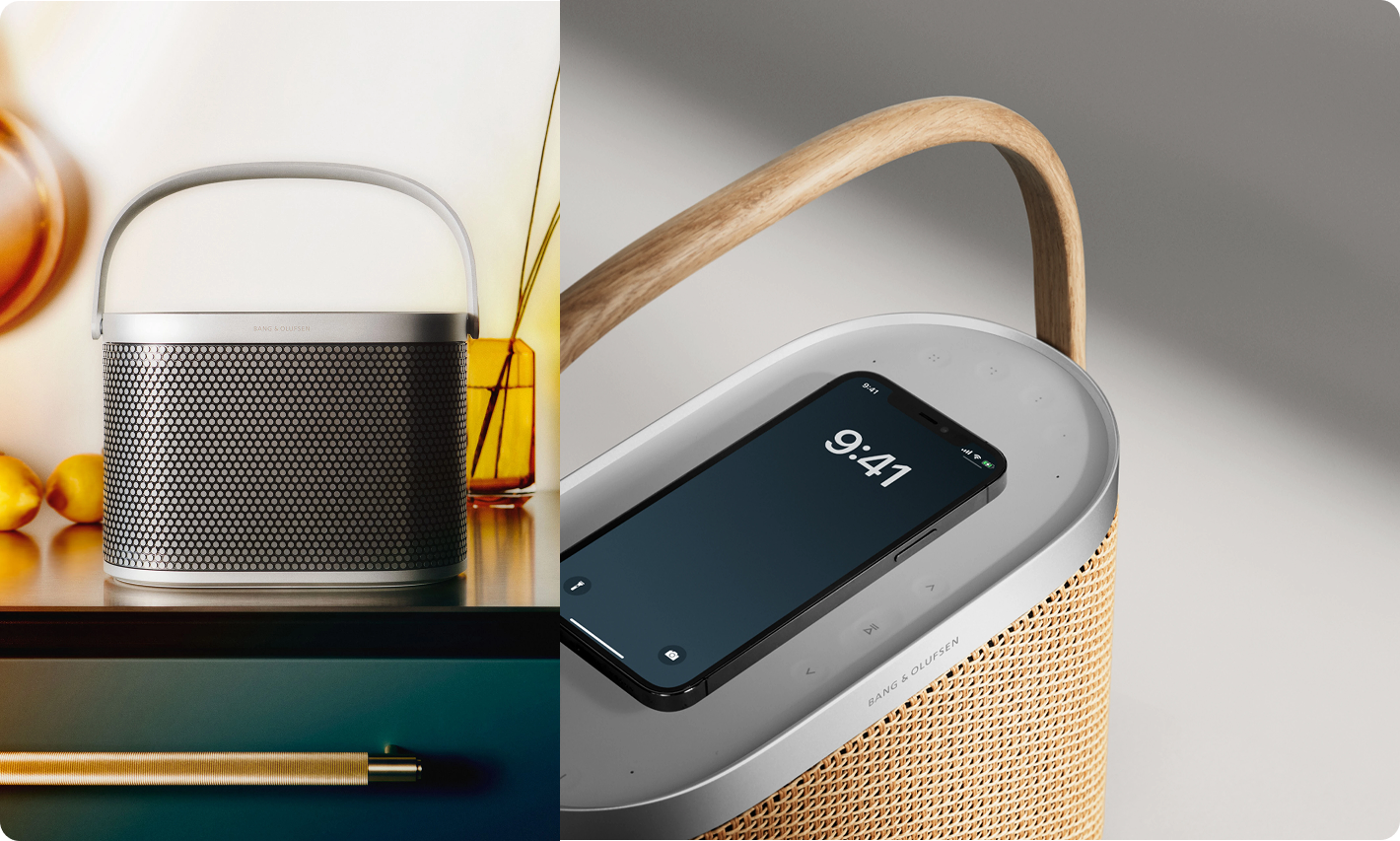
This project focused on the portable speaker category, specifically informing the strategic direction for the next product cycle around the Beosound A5.

The core question guiding the research was:

"Which customers should Bang & Olufsen design the next generation of portable speakers for?"

Rather than starting from product features, the goal was to understand how different user segments relate to the category and where Bang & Olufsen could differentiate meaningfully.
B&O Product
!

Detected challenges

The research began with three strategic uncertainties:

- Increasing competition The portable speaker market was rapidly expanding, with premium and mass-market brands entering the category.

- Technology transition Emerging digital ecosystems were reshaping expectations around connectivity, software and smart features.

- Portfolio positioning It was unclear which customer segments Bang & Olufsen should prioritise for the next product cycle.

These challenges required a deeper understanding of both market dynamics and user behaviour.

The programme began with a structured secondary research phase to map the landscape before collecting new data.

Secondary research scope

Internal sources

- Existing target group research
- Current portfolio positioning
- Internal strategic direction

External sources

- Competitor landscape
- Category growth trends
- Consumer behaviour shifts between analogue and digital ecosystems

This phase helped identify key hypotheses and knowledge gaps that would guide the primary research.

The primary research phase combined product analysis and expert insights.

First, I conducted hands-on testing of competitor products, analysing how leading devices performed in real-world usage and where Bang & Olufsen's experience diverged from the competition.

Second, I conducted interviews with more than 10 retail and category experts across key markets. These conversations provided insight into purchasing behaviour and real-world sales dynamics.

Together, these inputs helped refine the research questions for the large-scale user study.

The next phase focused on understanding customer attitudes and usage patterns at scale.

The research was structured in two stages. First, an exploratory pilot survey tested the assumptions and refined the research design. Second, a large-scale survey with 400 customers across six countries captured data on:

— usage contexts
— product values
— purchase drivers
— brand perception

This phase provided the quantitative foundation for identifying meaningful user segments within the category.

B&O Research

Qualitative insights from expert interviews and product testing were synthesised into key themes about category dynamics and experiential gaps.

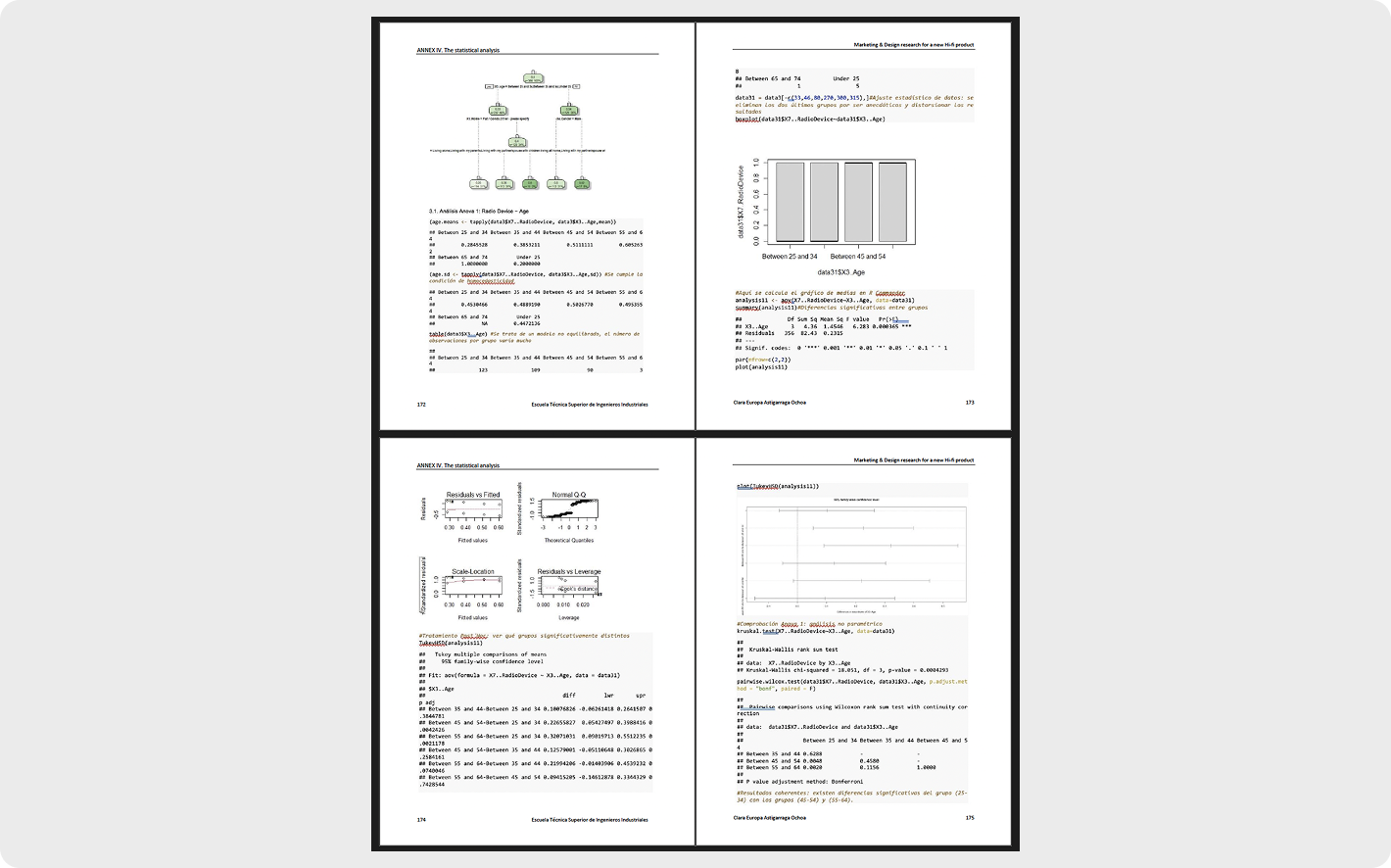
The survey dataset was analysed in R Studio, using statistical techniques including random forest decision trees and ANOVAs to identify patterns across customer behaviour and preferences.

This analysis helped reveal distinct customer segments and the factors influencing their relationship with portable speakers and the Bang & Olufsen brand.

B&O Data Analysis

The analysis connected user segments to product implications, helping define:

— which experiences the product should prioritise
— how the portfolio could differentiate in a crowded category
— which technological directions aligned with target users

This step translated research insights into actionable product strategy.

Due to NDA restrictions, the specific findings cannot be disclosed.

However, the research produced several key strategic outputs that informed internal discussions across product, design and R&D.

Deliverables

User archetypes

Data-driven customer segments derived from the survey analysis, capturing different attitudes, behaviours and expectations within the category.

Portfolio positioning

Strategic recommendations on how Bang & Olufsen could position its portable speaker portfolio across these segments.

Concept directions

Early product concepts tailored to each archetype, providing R&D and design teams with grounded starting points for future product development.

Executive presentation

The full synthesis was presented to senior leadership and contributed to product roadmap discussions across design and engineering teams.

The project helped provide a clearer evidence base for future decisions in the portable speaker category.

It also demonstrated the value of combining market understanding, user research and statistical analysis when defining product strategy.

The work was awarded 9.7/10 by the Polytechnic University of Madrid and contributed to ongoing discussions about the future direction of Bang & Olufsen's audio portfolio.

Next project Symbiotic Home Ecologies →

I would love to chat with you!

Send me an email at clara.astiochoa@gmail.com
or find me on LinkedIn